Best Training Treats for Border Collies (and How Many to Give)
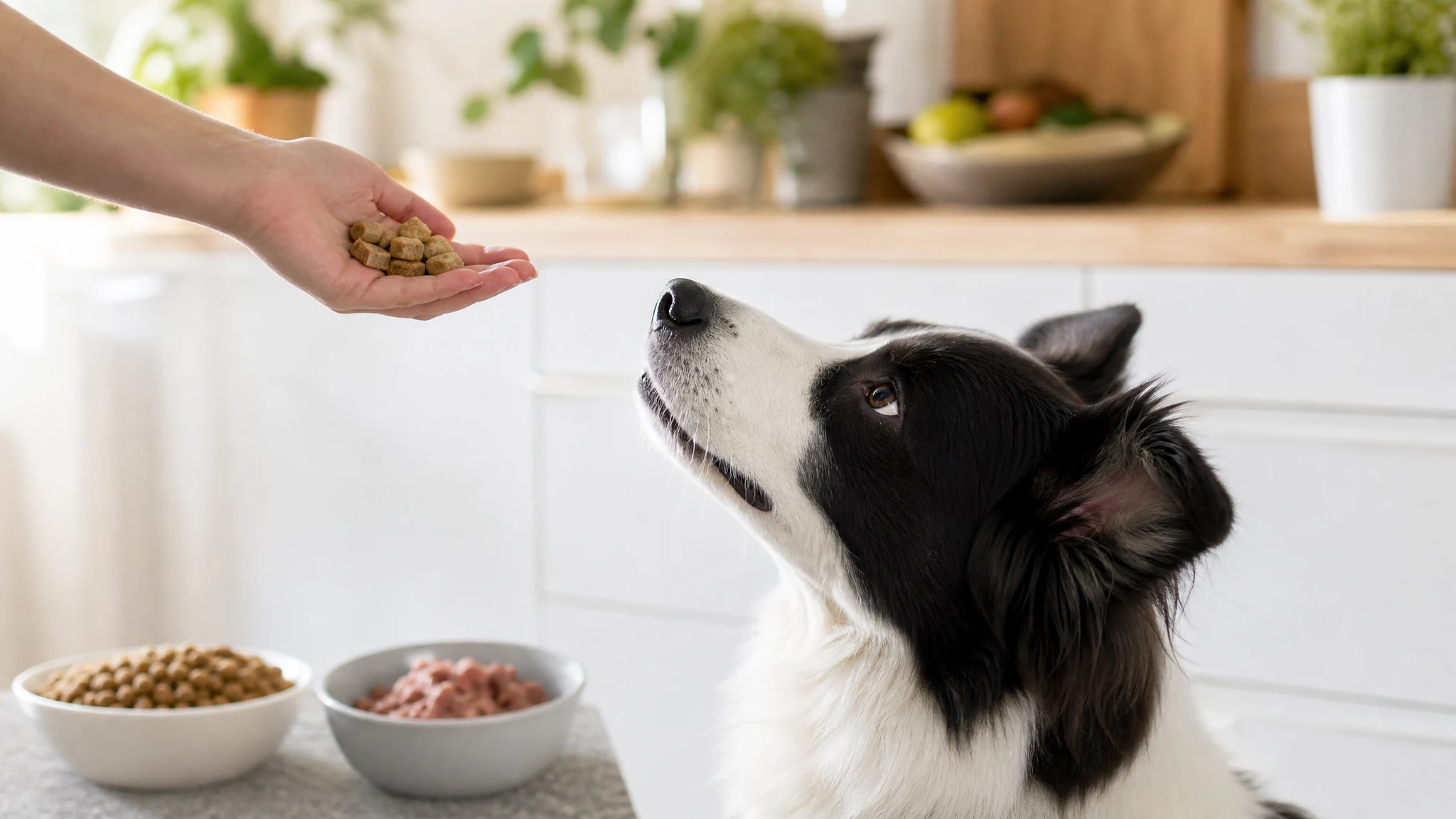
General nutrition information compiled from product labels and published sources, not veterinary advice. Your veterinarian is the right person to choose a diet for your dog, especially one with a health condition.
A Border Collie can learn a new cue in a handful of repetitions, which means a training session can burn through a lot of treats very quickly. The best treats for Border Collies are small, soft, easy to swallow and counted as part of the day's food.
This guide walks through choosing training treats for a Border Collie, sizing them, and keeping the calories in check. It is based on reading labels and general feeding guidance. We did not run feeding trials or taste tests, and we do not name specific treat products here.
Why treat choice matters for this breed
The Border Collie Society of America, citing the AKC standard, describes the breed as medium-sized, with males standing 19 to 22 inches and females 18 to 21 inches. PetMD gives a typical weight of about 30 to 55 pounds. That is a mid-sized dog doing a lot of repetitions, so small calorie differences per treat add up fast.
PetMD also describes obesity as rare in the breed because of its activity level. That is reassuring, but it does not mean treats are free. A dog on a quiet week, an injury rest or a winter off from sports can gain weight on a normal treat habit.
What you need
- Two or three treat types in different value levels (see the categories below).
- A treat pouch or a small container within easy reach.
- A kitchen scale or a measuring cup for your dog's daily food.
- The calorie information from your dog's food bag or the brand's own page.
- A small pair of scissors or a knife to cut treats down.
- A notebook or phone note to track the day's treats.
The three treat categories worth knowing
Soft training treats
Soft, moist treats are easy to break into tiny pieces and quick to chew. That keeps the pace of a session high, which suits a dog that wants to move on to the next cue. Check the label for calories per treat, since some soft treats are surprisingly rich. Look for an AAFCO statement or a clear note that the product is a treat or snack.
Freeze-dried single protein
Freeze-dried treats made from one protein source, such as a single meat, have a short ingredient list. That makes them easy to read and handy if you are keeping track of what your dog eats. They are usually strongly scented, so many handlers save them for harder work, like recalls around distractions. They can be crumbled into small pieces. Always read the label, because the ingredient list is the only thing that tells you what is actually in the bag.
Vegetables
Some dogs happily work for small pieces of plain vegetables such as carrot or green beans. These are usually lower in calories than commercial treats, which helps on days with long sessions. Some vegetables and add-ons are unsafe for dogs, so confirm any new food with your veterinarian before relying on it. Introduce one new item at a time, in small amounts.
Step-by-step: choosing and using training treats
Step 1: Work out your dog's daily food first
Start with the main diet. Find the calories per cup on the food label or the brand's page. For example, Royal Canin lists its Medium Adult dry food at 340 kcal ME per cup (as fed, calculated), and Hill's Science Diet lists its Adult Large Breed dry food at 365 kcal per cup. Those are examples of where to look, not a recommendation for your dog.
Feeding charts are starting points. Hill's, for instance, says to adjust feeding amounts as necessary to maintain optimal weight and to ask your veterinarian if you are unsure. If you want to compare complete foods by label, see our guide on Border Collie dog foods compared by label.
Step 2: Set a treat budget
A widely repeated guideline, attributed to WSAVA calorie guidance, is that treats should make up no more than about 10 percent of a dog's daily calories, with the rest coming from a complete and balanced diet. We have not verified the wording against WSAVA's own text, so confirm the guideline and your dog's calorie target with your veterinarian.
Here is a made-up example to show the math. If a dog's calorie target were 1,000 calories a day, 10 percent would be 100 calories of treats. Your dog's real number will differ. Your veterinarian is the right person to set it.
Step 3: Cut treats small
Border Collies work for the reward and the game, not the size of the snack. Break treats into pieces about the size of a pea or smaller. Tiny pieces let you reward many repetitions without blowing the budget, and they are swallowed fast, so the dog stays focused.
Larger pieces make sense only for a rare jackpot, such as a first reliable recall in a new place.
Step 4: Count the treats in advance
Before each session, put the day's treat allowance in a container or pouch. When it is empty, the treat portion of the day is done. This takes the guesswork out of it. Remember to count chews, dental sticks, spoonfuls of food used to take medicine and bits of cheese or meat dropped in the kitchen.
Step 5: Reduce meals on heavy training days
If a session uses a lot of treats, take a small amount out of the dog's regular meal to balance it. A simple way is to use part of the day's kibble as training rewards. Dry food pieces work well as low-value treats and need no extra counting beyond the meal itself.
Step 6: Match value to difficulty
Use your lowest-value reward for easy, familiar cues at home. Move up to soft or freeze-dried treats for new skills or distracting places. Keep the best treat for the hardest moment. This also means you do not need many high-calorie rewards in a day.
Step 7: Reward quickly and fade gradually
Mark the right behavior with a word or clicker, then deliver the treat within a second or two. Reward-based training of this kind is in line with the American Veterinary Society of Animal Behavior (AVSAB). Once a behavior is reliable, reward some repetitions with praise, a toy or a game of tug in place of food. Many herding dogs find movement and play very rewarding.
Step 8: Check body condition every couple of weeks
Feel along your dog's ribs. You should be able to feel them under a thin layer of coat and muscle without pressing hard. If you cannot, or if the waist looks less defined, cut back on treats and ask your veterinarian about the daily amount. Weighing your dog regularly can also help you spot change early.
Tips for better sessions
- Keep sessions short, a few minutes at a time, and end while the dog is still keen.
- Rotate treat types so one flavor does not lose its appeal.
- Store soft treats in a sealed container and follow the brand's storage directions.
- Introduce new treats slowly, one at a time. A sudden change can upset some dogs' stomachs.
- Use the same treat budget on rest days as active days unless your vet advises otherwise.
- Check each package for calories per treat. If the package does not list it, look for the information on the brand's own site or ask the brand.
Common mistakes to avoid
- Giving whole-size treats. Big pieces mean fewer reps and more calories.
- Forgetting treats count as food. Calories from treats are real, even when the pieces are tiny.
- Choosing by the front of the bag. Words like "natural" or "premium" are marketing. The ingredient list and calorie statement tell you more.
- Relying on one rich treat. A dog that only works for the best reward may stall when you run out.
- Treating to calm a dog down. Handing out food for every bit of restlessness can teach the wrong lesson and add calories.
- Skipping the vet conversation. If your dog has a medical condition, allergies or a prescribed diet, ask what treats are appropriate. Prescription diets are only something a veterinarian prescribes, and treats may need to fit them.
What to expect
With small, well-timed rewards and a clear daily budget, many Border Collies stay engaged through training sessions and learn cues steadily. Keeping treats within a sensible share of daily calories may help support healthy weight management, though results vary by dog, age, activity and the main diet.
No treat prevents or treats a disease. PetMD describes hip dysplasia as a common issue in the breed, and the Border Collie Society of America lists Imerslund Grasbeck Syndrome, a vitamin B12 absorption disorder, among conditions its DNA testing page covers. Questions about those conditions and diet belong with your veterinarian, who can decide what suits your individual dog.
Puppies need extra care. PetMD says puppy formulas are usually fed until about 12 to 18 months in this breed. Ask your veterinarian how to handle treats during growth, and use the puppy's food calories as the base for your budget.
Quick recap
- Find the daily calories of your dog's main food.
- Set a treat budget, commonly cited as about 10 percent of daily calories, and confirm it with your vet.
- Choose from soft treats, freeze-dried single protein or vegetables, reading each label.
- Cut treats to pea size or smaller.
- Count them out before each session and trim meals when needed.
- Check body condition regularly and adjust.