Border Collie Weight by Age: A Month-by-Month Growth Chart
General nutrition information compiled from product labels and published sources, not veterinary advice. Your veterinarian is the right person to choose a diet for your dog, especially one with a health condition.
Most owners want a simple table that says what a Border Collie should weigh at each age. The honest answer is that no reliable month-by-month weight table exists for the breed in the sources we trust. The breed standard does not give weights at all.
What you can do is build your own chart, check it against the adult range, and share it with your veterinarian. This guide shows you how, step by step.
What is known about Border Collie size
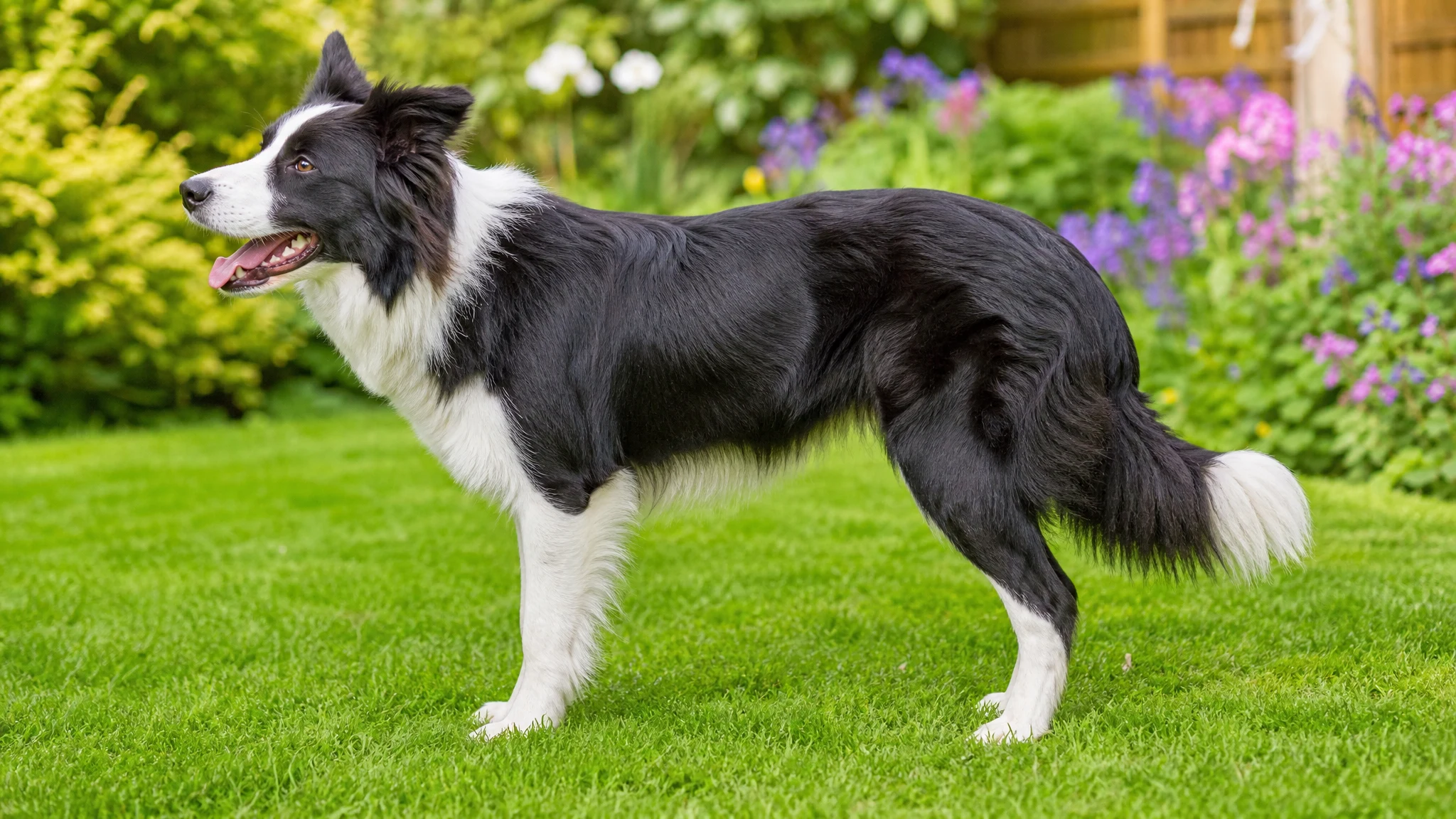
The Border Collie Society of America, on its AKC Standard page, calls the breed medium-sized. The standard lists height only: 19 to 22 inches for males and 18 to 21 inches for females. It gives no weight.
PetMD's Border Collie page, a secondary source, puts adult weight at about 30 to 55 pounds. It also says puppies stay on puppy food until about 12 to 18 months, then move to adult food.
That is the extent of what we can cite. Any chart that claims an exact weight for a 4-month-old Border Collie is a guess. Individual dogs vary a lot within that 30 to 55 pound range.
What you need
- A bathroom scale, or a pet or baby scale for small puppies
- A notebook or phone notes app
- A soft tape measure for height checks
- Your puppy's food label and its feeding guide
- A small treat or two to make weigh-ins pleasant
- Your breeder's records, if you have them, including birth weight and parent sizes
Step 1: Get a starting weight
Weigh your puppy the first week you have them. Ask the breeder or rescue for any earlier weights and write them down with dates.
If you are using a bathroom scale, weigh yourself first. Then weigh yourself holding the puppy and subtract. Use the same scale every time so the numbers can be compared.
Step 2: Weigh on a set schedule
Pick the same day each month, ideally the same time of day, before a meal. Many owners weigh every two to four weeks during the fast growth months. Your veterinarian may suggest a different schedule, and that advice should win.
Weigh-ins at routine vet visits are a good extra data point. Ask the clinic to give you the number.
Step 3: Fill in your chart
Copy the table below and add the numbers as you go. The weight columns are blank on purpose. The last column is for the adult range, which is the only weight figure we can cite.
| Age | Your dog's weight | Date weighed | Notes (appetite, body shape, vet comments) |
|---|---|---|---|
| 8 weeks | |||
| 3 months | |||
| 4 months | |||
| 5 months | |||
| 6 months | |||
| 7 months | |||
| 8 months | |||
| 9 months | |||
| 10 months | |||
| 11 months | |||
| 12 months | |||
| 15 months | |||
| 18 months | |||
| Adult | PetMD lists about 30 to 55 lb for adults |
Step 4: Check body shape, not just the number
A scale only tells part of the story. Run your hands along your dog's ribs. You should be able to feel them under a thin layer of coverage without pressing hard. Looking from above, most dogs show a waist behind the ribs.
Ask your veterinarian to show you how they score body condition. Once you know what to feel for, you can check at home between visits.
PetMD describes obesity as rare in the breed because of how active Border Collies are. Rare is not never. Treats, training rewards and a lower activity period can add up.
Step 5: Compare against the label, as a starting point
Food labels give feeding guides that are meant as starting points. Royal Canin's page for its Medium Adult formula, for example, says its guide is only a guide, and that grams are more accurate than cups. Hill's says to adjust amounts as needed to maintain optimal weight and to ask your veterinarian if you are unsure.
Use your chart to do exactly that. If your dog is gaining faster than you and your vet expect, or looks thin, talk to your vet before changing the amount yourself.
For a side-by-side look at specific products, see our comparison of foods by label data. It is based on reading labels and brand pages, not on feeding trials or taste tests.
Step 6: Choose a growth formula with the size label in mind
Puppy and all-life-stages foods carry a statement about large-size dogs. Victor's Hi-Pro Plus page, for instance, says the food is formulated for all life stages except for growth of large size dogs (70 lb or more as an adult). Other foods say they include growth of large size dogs.
A Border Collie is a medium breed, and the adult range cited by PetMD is under 70 pounds. Large-breed puppy formulas exist, but they are not made specifically for Border Collies. Read the statement on the bag and ask your veterinarian which fits your puppy.
Step 7: Move to adult food when your vet advises
PetMD says puppy food until about 12 to 18 months. That is a wide window, and your dog's chart, body shape and vet's opinion should guide the exact switch. Change foods gradually over several days unless your vet says otherwise.
Tips
- Take a photo from above and from the side at each weigh-in. Changes in shape are easier to see in pictures.
- Count training treats toward the daily total.
- Write down the food name and amount you feed next to each weight.
- Bring the chart to every vet visit.
Common mistakes to avoid
- Chasing a number from a random chart. Unsourced tables online often mix sizes and breeds. Your dog's own trend matters more.
- Using different scales. Switching scales can look like a gain or loss that is not real.
- Cutting food to hit a target. Puppies are growing. Do not restrict food without your vet's guidance.
- Ignoring height. A tall, lean adolescent can look thin and still be normal. The breed standard's height ranges (19 to 22 inches for males, 18 to 21 for females) are for adults.
- Skipping the label. The feeding guide on the bag is a starting point, not a prescription.
When to call your veterinarian
Call if your puppy stops gaining for several weeks, loses weight, seems unusually tired, or has ongoing stomach upset. Also call if you cannot feel the ribs at all, or if they are sharply visible.
PetMD describes hip dysplasia as a common issue in the breed, a joint fit problem that can lead to arthritis. Weight is one thing owners can monitor, but a veterinarian decides what is right for an individual dog. We are not saying any food prevents or treats joint problems.
The Border Collie Society of America's DNA testing page also lists intestinal cobalamin malabsorption (Imerslund Grasbeck syndrome), a vitamin B12 absorption disorder, among conditions the breed is tested for. If your puppy is not thriving, ask your breeder about test results and ask your vet what to check.
What to expect
If you weigh regularly, you will likely end up with a clear picture of your own dog's growth curve. That can make it easier to spot a slowdown or a quick gain early, and to have a more useful talk with your veterinarian.
Your dog may end up anywhere in the adult range, and a chart cannot promise a particular outcome. Steady, gradual growth and a healthy body shape are the signs most owners and vets look for.