Human Foods Border Collies Should Never Eat
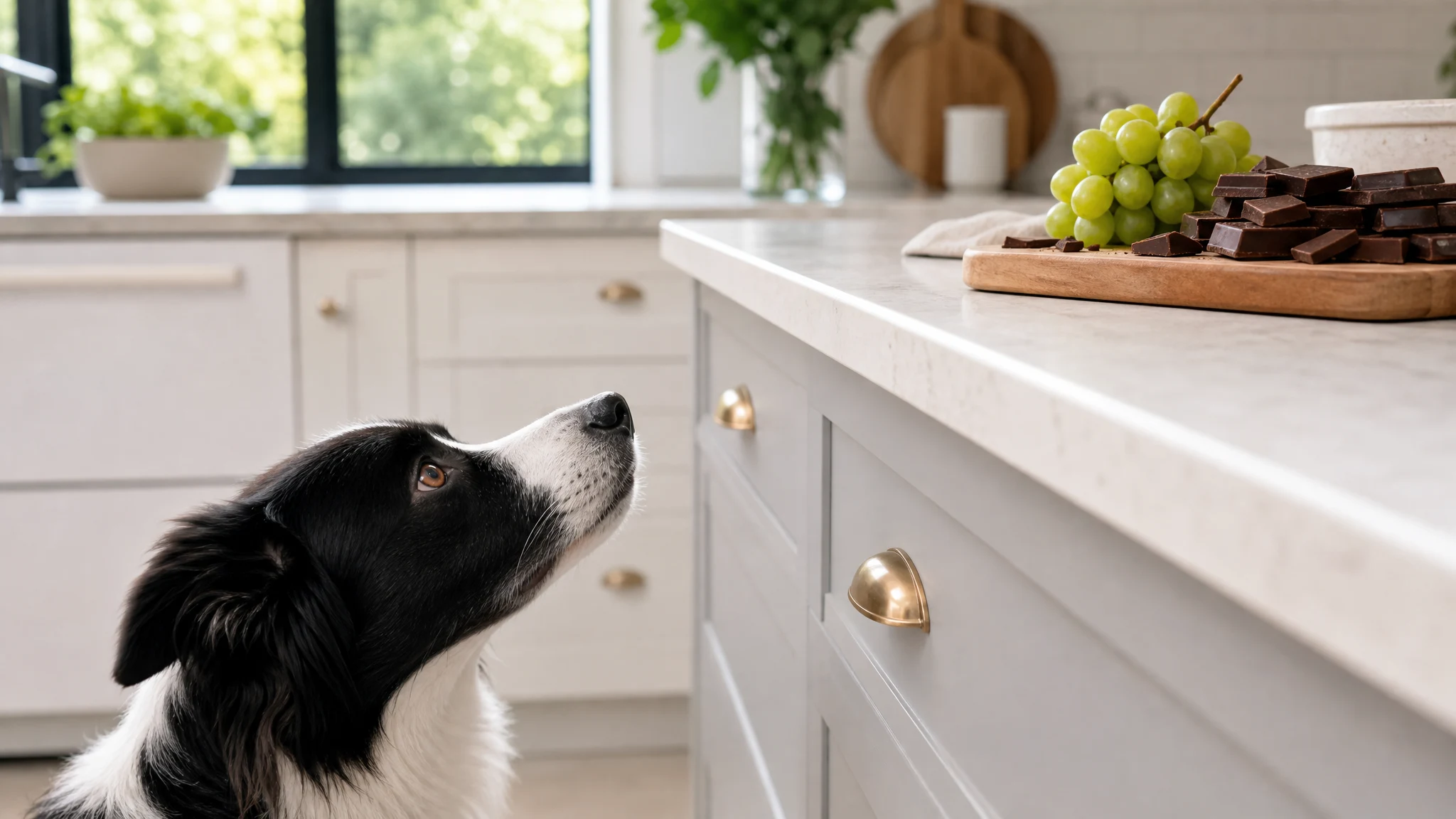
General nutrition information compiled from product labels and published sources, not veterinary advice. Your veterinarian is the right person to choose a diet for your dog, especially one with a health condition.
Border Collies are quick, watchful and always near the kitchen action, so table scraps can disappear fast. Many foods people enjoy are unsafe for dogs. This page answers the most common questions about human foods dogs can't eat, grouped by theme.
The toxic foods named here follow the ASPCA Animal Poison Control list of people foods to avoid. Nothing here replaces advice from your veterinarian, who decides what is right for an individual dog.
The Basics
What can Border Collies not eat?
The ASPCA Animal Poison Control list includes chocolate, caffeine, grapes and raisins, xylitol, onions, garlic, chives, macadamia nuts, alcohol and raw yeast dough. Other foods, such as cooked bones and very fatty scraps, cause trouble in a different way. The sections below explain each one.
Is the list different for a Border Collie than for other dogs?
No. The ASPCA list applies to dogs in general, and nothing we found says Border Collies are safe with any item on it. The breed club, the Border Collie Society of America, calls the breed medium-sized, and PetMD gives a typical adult weight of about 30 to 55 lb. Check with your veterinarian about how that size affects risk for your dog.
Why do the same foods affect dogs so differently from people?
Dogs process some compounds more slowly or in different ways than people do. A snack that is harmless to you can cause real harm to a dog. Size, health and the amount eaten all matter, so call for advice rather than guessing.
Does a small taste matter?
It can. Some items, like xylitol, are a concern even in small amounts, while others depend on how much the dog ate and how big the dog is. We do not give amounts here. If your dog has eaten something on the list, contact your veterinarian or ASPCA Animal Poison Control.
Sweets, Drinks and Baked Goods
Can Border Collies eat chocolate?
No. Chocolate contains compounds called methylxanthines, which dogs handle poorly, and the ASPCA lists it as a food to avoid. Dark chocolate and baking chocolate are generally considered the more concerning kinds. Keep all of it out of reach.
What is xylitol and where is it found?
Xylitol is a sugar substitute. The ASPCA lists it as dangerous for dogs. It turns up in some sugar-free gum, candy, baked goods and certain nut butters, so read the ingredient list before sharing anything.
Can Border Collies have coffee, tea or soda?
No. Caffeine is on the ASPCA list of foods to avoid, and it is found in coffee, tea, energy drinks and many sodas. Used coffee grounds and tea bags are a risk too, so keep the trash closed.
Is alcohol ever okay?
No. The ASPCA lists alcohol as unsafe for dogs. This includes drinks left on a low table and foods made with alcohol. Clean up after gatherings so a curious dog cannot reach a glass.
What about raw bread dough?
Raw yeast dough is on the ASPCA list of foods to avoid. It can expand in a dog's stomach, and the fermenting yeast produces alcohol. Keep rising dough covered and out of reach.
Fruits, Vegetables and Nuts
Can Border Collies eat grapes or raisins?
No. The ASPCA lists grapes and raisins as dangerous, and the reason is not fully understood. That uncertainty is why vets suggest treating any amount as a reason to call. This includes raisins baked into cookies and trail mix.
Are onions and garlic really a problem?
Yes. The ASPCA lists onions, garlic and chives, and this covers raw, cooked and powdered forms. They can damage a dog's red blood cells. Watch for them in leftovers, soups and seasoned meats.
Are macadamia nuts unsafe?
Yes. The ASPCA lists macadamia nuts as a food to avoid. They are common in cookies and snack mixes, so check what a treat contains before sharing it.
What about avocado?
The ASPCA advises caution with avocado because of a compound called persin, and the pit is a choking and blockage hazard. Because the risk varies, it is simplest to skip avocado and ask your veterinarian if your dog has already eaten some.
Fatty, Salty and Bony Foods
Can Border Collies eat cooked bones?
It is best to avoid them. Cooked bones can splinter, and pieces can cause choking or injure the mouth or gut. Ask your veterinarian which chews, if any, suit your dog.
Are fatty scraps like bacon or trimmings okay?
They are not a good idea. Rich, fatty foods can upset a dog's stomach, and veterinary sources link sudden high-fat meals with a painful condition called pancreatitis. Plain, lean treats in small portions are a safer choice.
Is salty food a concern?
The ASPCA advises against feeding salty snacks such as chips and pretzels. Too much salt can make a dog very thirsty and sick. Ask your veterinarian what is right if your dog got into a salty snack.
Safe Snacks and Everyday Feeding
Can Border Collies eat carrots and apples?
Many dogs enjoy plain carrots and apple slices as low-effort snacks. Remove apple seeds and the core, and cut pieces to a size that will not cause choking. Introduce any new food slowly and ask your veterinarian first if your dog has health concerns.
Is peanut butter safe?
Some peanut butter is fine, but only if the label has no xylitol. Read the full ingredient list every time, since recipes change. When in doubt, skip it.
How should treats fit into a Border Collie's diet?
Treats should stay a small part of the day's food. PetMD describes obesity as rare in the breed because of its activity level, but extra snacks still add calories. Adjust the main meal if you give treats, and ask your veterinarian for a starting point. To see how complete foods compare, read our label-by-label food comparison. We compared label data only and ran no feeding trials or taste tests.
If Your Dog Eats Something Unsafe
What should I do right away?
Take away any remaining food and call your veterinarian or ASPCA Animal Poison Control. Do not wait for symptoms to appear. Do not make your dog vomit unless a professional tells you to.
What information should I have ready?
Note what your dog ate, roughly how much, when it happened and your dog's weight. Keep the package or label handy, since ingredients like xylitol matter. Find the current ASPCA Animal Poison Control contact details on the ASPCA website, because a consultation may carry a fee and we do not list one.
Which signs mean I should call at once?
Vomiting, diarrhea, drooling, tremors, weakness, a swollen belly or unusual behavior are all reasons to call. Even without signs, a known exposure to something on the list is reason enough. If your regular clinic is closed, ask them about the nearest emergency hospital.
Sources
The list of foods to avoid follows the ASPCA Animal Poison Control resources. Check the ASPCA website for its current list and contact details.