What's the Best Dog Food for a Border Collie That Won't Eat?
General nutrition information compiled from product labels and published sources, not veterinary advice. Your veterinarian is the right person to choose a diet for your dog, especially one with a health condition.
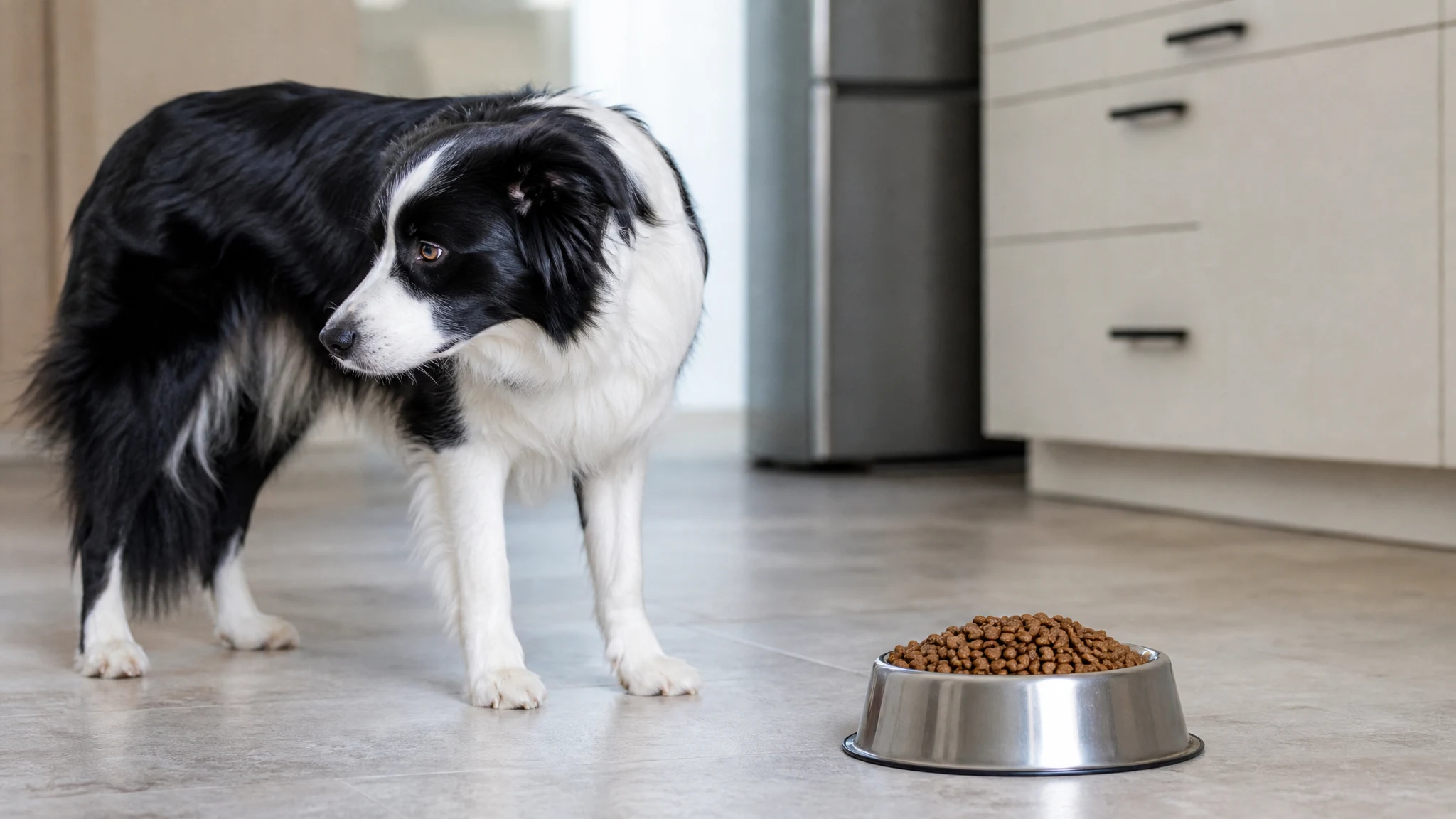
A Border Collie that turns away from the bowl worries owners fast. This is a working-type breed, so a dog that skips meals can seem out of character.
There is no single best food for a picky dog. The useful approach is to rule out health causes, fix the feeding routine, and then compare foods on what their labels say. This guide walks through those steps in order.
One note on method: we compared label data from each brand's own product page. We did not run feeding trials or taste tests, so we cannot tell you which food your dog will prefer.
What You Need
- A kitchen scale or measuring cup, so you know what your dog actually eats
- A notebook or phone note to log meals, treats and any other changes
- The bag or can label of the current food, including the AAFCO statement
- Your veterinarian's phone number
- One or two candidate foods to compare, based on the label data below
Step 1: Rule Out a Health Problem First
Loss of appetite is a symptom, not a diagnosis. Dental pain, stomach upset, stress and illness can all cause it.
Call your veterinarian if your dog refuses food for more than a meal or two. Call sooner if you see vomiting, diarrhea, lethargy, drooling, or weight loss. Puppies and seniors deserve an earlier call.
The Border Collie Society of America lists Imerslund Grasbeck Syndrome, a vitamin B12 absorption disorder, among the conditions the breed is DNA tested for. Whether it is relevant to any individual dog is a question for your veterinarian, not for a food label.
Step 2: Check Whether the Food Fits Your Dog's Life Stage and Size
PetMD describes the breed as medium-sized, at roughly 30 to 55 lb as an adult, and says puppies move to adult food at about 12 to 18 months. The Border Collie Society of America's AKC Standard page also calls the breed medium and gives height only: 19 to 22 inches for males and 18 to 21 inches for females.
Check the AAFCO statement on the bag. It tells you which life stage the food is formulated for. Some labels read "except for growth of large size dogs (70 lb or more as an adult)." A Border Collie is a medium breed, so that wording is not a problem for most adults, but read the bag for a growing puppy.
A food that does not match your dog's stage is not always the reason for refusal. It is still worth ruling out before you go shopping.
Step 3: Tighten the Feeding Routine
Many "won't eat" cases are routine problems. Try this for several days:
- Feed at the same times each day, using a fixed bowl location.
- Leave the bowl down for a set window, then pick it up. Do not leave food out all day.
- Cut back on treats, table scraps and chews, which can take the edge off appetite.
- Use part of the daily kibble as training rewards, so your dog earns food through reward-based work.
- Keep mealtime calm. Avoid hovering, coaxing or scolding.
Border Collies are active, and some dogs eat better after a walk or a training session than before one. Try moving the meal to a quieter time of day.
Make sure the portion matches what your dog needs. Our feeding chart by age explains how to treat label amounts as a starting point. A dog offered more than it needs may simply leave food behind.
Step 4: Compare Foods by Label Data
Marketing words like "premium" or "natural" tell you little. The table below sticks to what each brand's own page states. Dry and fresh foods hold different amounts of water, and Hill's lists dry-matter averages instead of guaranteed minimums, so the protein and fat numbers are not directly comparable across rows.
| Food | Form and life stage | Protein / fat | Calories | First ingredients |
|---|---|---|---|---|
| Royal Canin Medium Adult | Dry, adult maintenance (AAFCO profiles) | 23.0% / 12.0% min | 340 kcal ME per cup | Brewers rice, chicken by-product meal, oat groats, wheat, corn protein meal |
| Royal Canin Medium Digestive Care | Dry, adult maintenance (AAFCO profiles) | 23.0% / 16.0% min | 321 kcal ME per cup | Chicken by-product meal, corn, brewers rice, chicken fat, brown rice |
| Victor Classic Hi-Pro Plus | Dry, all life stages except growth of large dogs (70 lb or more as an adult) | 30.0% / 20.0% min | 406 kcal per cup | Beef meal, grain sorghum, chicken fat, whole grain millet, blood meal |
| Hill's Science Diet Adult Large Breed Chicken & Barley | Dry, adult maintenance; made for large breeds | 23.8% / 15% (dry matter averages) | 365 kcal per cup | Chicken, cracked pearled barley, brown rice, brewers rice, whole grain wheat |
| Freshpet Large Dog Multi-Protein | Fresh, refrigerated; adult maintenance (AAFCO profiles) | 20% / 14% min | 348 kcal per cup | Chicken, egg, beef, salmon, beef liver |
| Just Food For Dogs Chicken & Rice | Fresh, frozen; all life stages | 8.0% / 3.0% min | 43 kcal per oz (774 kcal per 18 oz pack) | Chicken, long-grain white rice, long-grain brown rice, carrots, kale |
What the Label Data Shows
Victor's Hi-Pro Plus is the most calorie-dense dry food here at 406 kcal per cup. Victor describes it as suited to high-energy, active dogs. A calorie-dense food can mean smaller portions, which some owners find easier with a small eater. It also means a little overfeeding adds up fast.
Royal Canin's two medium formulas sit lower in calories. Royal Canin states that no Border Collie specific formula appeared on its site, so these are medium-breed foods, not breed-specific ones.
The Hill's, Freshpet and Victor large-breed puppy products are made for large dogs. A Border Collie is medium, so none of them is breed-specific for this dog. Large-breed formulas are not wrong, but their size targeting does not match.
Fresh and frozen foods list lower protein and fat percentages mainly because of their moisture. Do not read the 8.0% protein on the Just Food For Dogs label as lower quality than a dry food's 23%. The numbers are on different bases.
The label data above cannot say which food your dog will eat. It only shows what each product is, so you can pick a sensible candidate and talk it over with your veterinarian.
Step 5: Switch Foods Gradually
- Start with a small amount of the new food mixed into the old.
- Increase the new portion over about a week, watching stool and appetite.
- Follow the label's feeding guide as a starting point, then adjust to body condition. Hill's, for example, says to adjust amounts to maintain optimal weight and to ask your veterinarian if unsure.
- Keep the new food for a fair trial period before judging it.
If you try a fresh food, follow the brand's storage rules. Freshpet states to refrigerate and use within 7 days of opening.
Note that the FDA has investigated a possible link between certain diets and canine dilated cardiomyopathy (DCM). The FDA's last update was December 23, 2022, and it says report counts alone do not establish a causal link. If you have questions about diet and heart health, ask your veterinarian.
Tips and Common Mistakes
- Changing foods every few days. Constant rotation can teach a dog to hold out for something new. Give each food a fair trial.
- Adding lots of toppers. Extras can unbalance a complete diet and make plain food less appealing. Ask your veterinarian before adding anything regularly.
- Judging by the ingredient list alone. Ingredient order, AAFCO statement, calories and life stage all matter together.
- Skipping the vet. A dog that stays off food may have a medical reason that no recipe will fix.
- Using a prescription diet without a prescription. Those are only for dogs a veterinarian has examined and prescribed for.
- Pressure at the bowl. Forcing or scolding makes mealtimes stressful. Keep things calm and reward-based.
Border Collies often have high energy and an eagerness to work. Many owners find they can use meals as part of enrichment, such as a food puzzle or training reward. Whether that helps your dog is something to watch for yourself.
What Results to Expect
If a routine problem was behind the refusal, a steadier schedule and fewer extras may help your dog eat more consistently within a week or two. A better-matched food may also help, though no result is certain.
If your dog still refuses food after these steps, go back to your veterinarian. Bring your meal log and the labels. No food is a guaranteed fix, and a food cannot treat or prevent a medical condition.
Sources
- Border Collie Society of America, AKC Standard page
- Border Collie Society of America, DNA Testing page
- PetMD, Border Collie breed page
- FDA CVM, DCM investigation page
- Royal Canin, Medium Adult Dry Dog Food
- Royal Canin, Medium Digestive Care
- Victor, Classic Hi-Pro Plus
- Hill's Science Diet, Adult Large Breed
- Freshpet, Large Dog Multi-Protein Recipe
- Just Food For Dogs, Chicken & Rice