Best Treats for Border Collies for Training vs Everyday Rewards
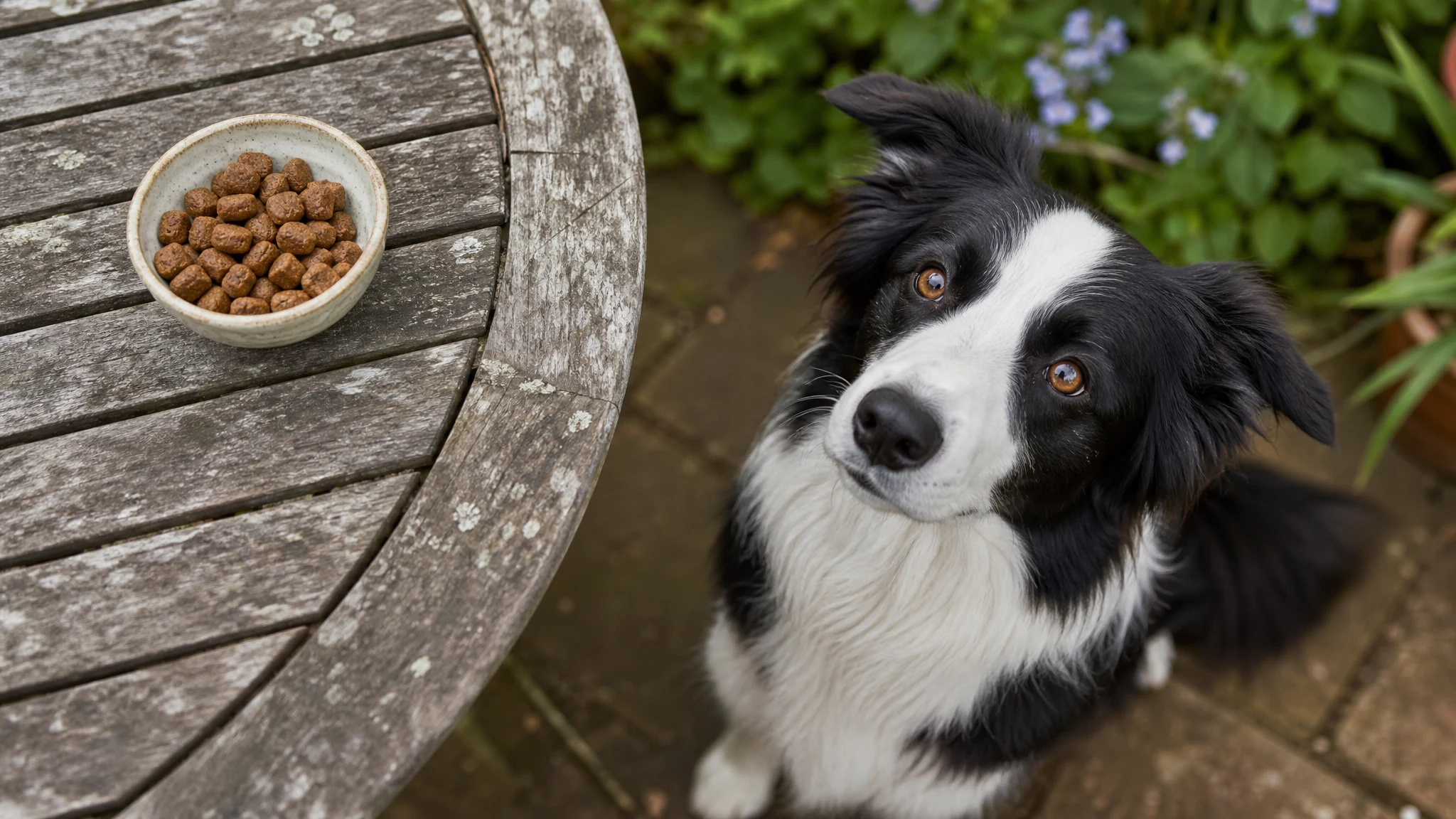
General nutrition information compiled from product labels and published sources, not veterinary advice. Your veterinarian is the right person to choose a diet for your dog, especially one with a health condition.
A Border Collie can do dozens of repetitions in one training session. The treats add up quickly. A reward that works well for a short lesson may be a poor choice for a calm moment on the couch.
This guide shows how to split treats into two jobs: high-value rewards for training and simple rewards for daily life. It does not rank treat brands. We did not feed or taste-test any treats. It is based on published label information and breed sources, so use it as a method, not a shopping list.
Why the Border Collie needs a treat plan
PetMD describes the Border Collie as a medium dog, commonly 30 to 55 lb. The Border Collie Society of America, which publishes the AKC standard, also calls the breed medium-sized. At that size, small extras matter more than they would for a larger dog.
PetMD also says obesity is rare in the breed because of its activity level. That is not a reason to skip the math. A quiet week, an injury or a switch to indoor life can change how much a dog burns.
PetMD lists hip dysplasia as a common issue in the breed. Treats do not prevent or treat it. Keeping a dog at a sensible weight is something to discuss with your veterinarian, who decides what is right for an individual dog.
For the wider picture of what goes into the bowl, see Border Collie nutrition and the diet factors that matter.
What you need
- Your dog's regular food, with the feeding guide from the bag or the brand's page
- A small container or treat pouch
- Two or three types of treat, sorted by how exciting they are to your dog
- A kitchen scale or measuring cup, so you know what you are giving
- The treat package, to read the ingredient list and calorie statement
- A note of your dog's current weight, from a recent vet visit if possible
Step 1: Read the label and know the calories
Start with the package. Look for a statement of calories per treat or per serving. If a treat does not list calories, check with the brand before you rely on it for heavy training use.
Food calories vary a lot between products. Royal Canin lists its Medium Adult dry food at 340 kcal per cup on its own product page. Victor lists Classic Hi-Pro Plus at 406 kcal per cup on its page. A handful of one is not the same as a handful of the other, so measure instead of guessing.
If you are unsure how many treat calories fit into a day, ask your veterinarian. Do this especially if your dog has a health condition or takes part in demanding sport.
Step 2: Sort treats into two tiers
Make two groups based on your dog's reaction, not on the price tag.
Training treats
- Pea-sized or smaller, so the dog swallows fast and gets back to work
- Soft enough to eat in one second
- Interesting enough to compete with sheep, balls and the neighbor's cat
Everyday rewards
- Part of the regular meal, such as a few pieces of kibble
- A calm word, a scratch or a chance to go through the door
- A longer-lasting chew only if your vet agrees it suits your dog
Keep the best treats for hard skills, like recall around distractions. Using them for easy sits teaches your dog that ordinary behavior is not worth much.
Step 3: Take treat calories out of the meal
Treats are food. If you plan a long session, reduce the meal to match. The bag's feeding guide is a starting point, not a fixed rule. Hill's, for example, tells owners to adjust amounts as necessary to maintain optimal weight and to ask a veterinarian if unsure.
The easiest method is to measure the daily meal in the morning. Set aside a portion in a jar, and use that portion as the day's training rewards. Whatever is left at bedtime goes in the bowl.
Adjust for age and activity. PetMD says puppies stay on puppy formula until about 12 to 18 months, then move to adult food. A growing dog has different needs than an adult, so confirm amounts with your vet. Watch your dog's body condition week to week. If your dog gains weight, cut back on treats before cutting the meal.
Step 4: Use treats to mark and build behavior
Reward-based training is the approach endorsed by the American Veterinary Society of Animal Behavior (AVSAB). Here is a simple routine.
- Pick one skill. A hand target, a sit or a settle on a mat works well.
- Mark the moment. Say a short word like "yes" the instant the dog does it right.
- Deliver the treat within a second or two. Quick timing makes the link clear.
- Keep sessions short. A few minutes is enough. Stop while your dog is still keen.
- Vary the reward. Once the behavior is reliable, reward some repetitions with a treat and others with praise or play.
- Add difficulty slowly. Change one thing at a time: distance, duration or distraction.
If your dog fails, make the task easier. Do not punish, scold or use aversive tools. Those approaches can damage trust and are not part of humane training.
Step 5: Set up everyday rewards
Border Collies notice everything, so everyday rewards teach as much as formal lessons. Reward calm behavior you want to see more of, such as lying on the mat while you cook or watching a passing bike without lunging.
Keep these rewards small and low-calorie. Pieces of the regular food work well. Also use non-food rewards: a ball toss, a walk or a sniff break. Many herding dogs value activity as much as food.
Choosing ingredients with care
Check the ingredient list for anything your veterinarian has told you to avoid. Short lists are easier to review. Be skeptical of front-of-bag claims such as "natural" or "premium." These words do not tell you how a treat fits into your dog's day.
Do not choose a treat because it claims to help joints, skin or digestion. A treat cannot prevent or cure a disease. Ask your vet if you have a health concern.
The Border Collie Society of America's DNA testing page lists Imerslund Grasbeck Syndrome, a vitamin B12 absorption disorder, among conditions the breed is tested for. If your dog has a diagnosed condition, follow your veterinarian's guidance on food and treats.
The FDA has an investigation page on possible links between certain diets and canine dilated cardiomyopathy (DCM). It last updated in December 2022 and notes that report counts alone do not establish a causal link. If you have questions about your dog's diet, discuss them with your vet.
Common mistakes to avoid
- Not counting treats. Dozens of small rewards can become a meaningful share of the day's food.
- Treats that are too big. Chewing slows the session and adds calories.
- Using the best treat for everything. It stops being special.
- Luring forever. Fade the treat from your hand so the dog responds to the cue, not the food.
- Training a tired or overfull dog. Run sessions before meals, when your dog is more interested.
- Switching treats suddenly. New foods can upset a dog's stomach. Introduce one at a time.
- Ignoring your vet for a dog with a health condition. Confirm amounts with your veterinarian before changing treats.
What to expect
With short, regular sessions, many owners find their dog becomes more focused and eager to work. Results vary with the dog's age, temperament and history, and no method works the same for every dog.
Splitting treats into two tiers may help you keep calories in check and make training rewards more meaningful. Weigh your dog regularly and talk to your veterinarian if you see steady gain or loss.
Quick reference
| Situation | Reward type | Size |
|---|---|---|
| New skill or distractions | Soft, high-value treat | Pea-sized or smaller |
| Known skill at home | Kibble from the daily meal | One or two pieces |
| Calm behavior during the day | Praise, a pat or a short game | Not applicable |
| Dog with a health condition | Only what your vet approves | Ask your vet |
Sources
- PetMD, Border Collie breed page
- Border Collie Society of America, AKC Standard page
- Border Collie Society of America, DNA Testing page
- FDA Center for Veterinary Medicine, DCM investigation page
- Royal Canin, Medium Adult Dry Dog Food
- Victor, Classic Hi-Pro Plus
- Hill's Pet, Science Diet Adult Large Breed