Border Collie Weight Chart: What's Healthy by Age and Sex
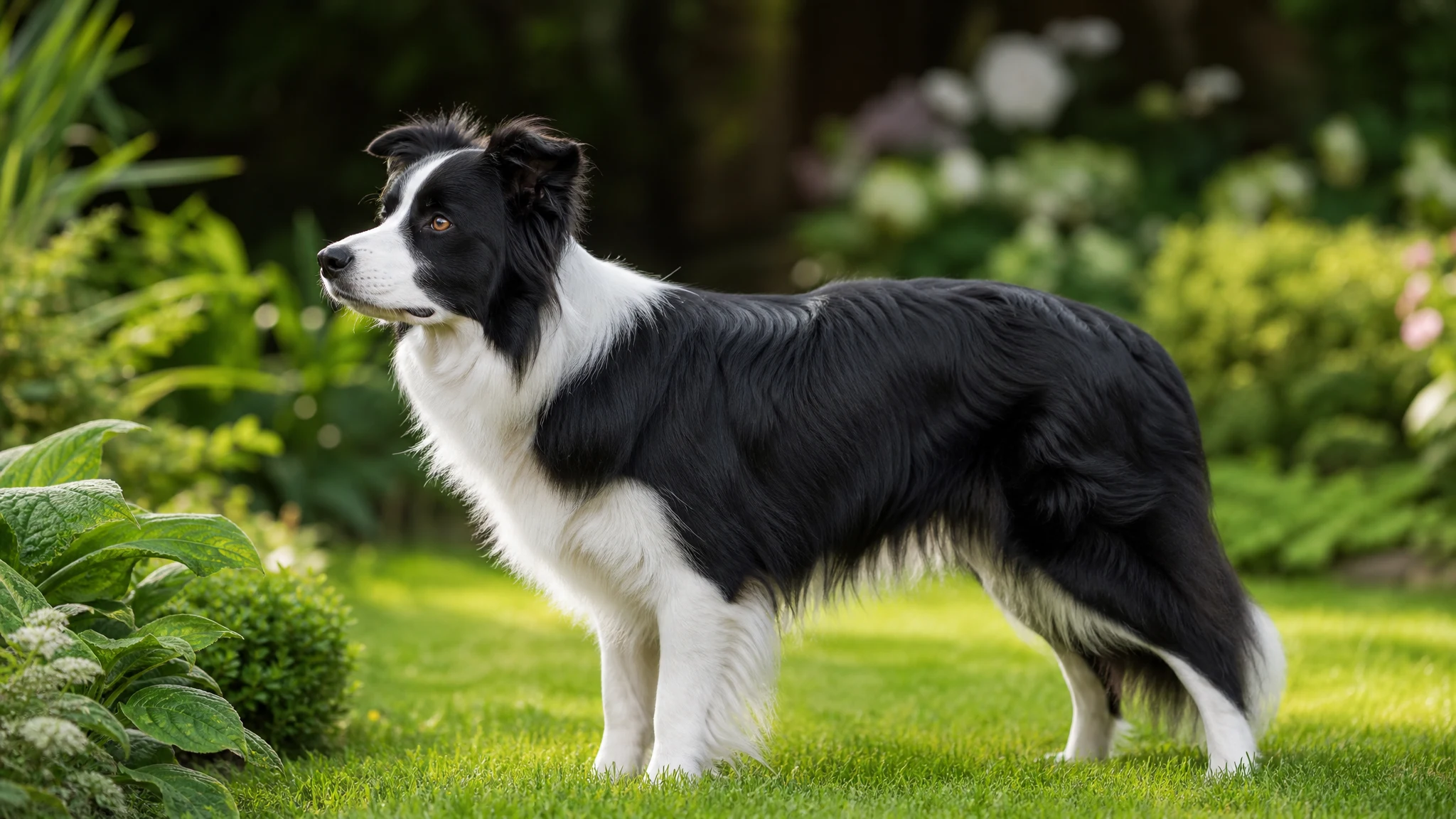
General nutrition information compiled from product labels and published sources, not veterinary advice. Your veterinarian is the right person to choose a diet for your dog, especially one with a health condition.
Many owners want a simple chart that says exactly what a Border Collie should weigh at every age. The honest answer is that no single published chart does this well for the breed. What you can do is combine a known size range, a few body measurements and a regular weigh-in routine, then review the results with your veterinarian.
This guide walks through that process step by step. It also explains what the published numbers say, and where they stop.
What the published numbers actually say
The American Kennel Club standard, as presented by the Border Collie Society of America, describes the breed as medium-sized. It gives height, not weight. Males are listed at 19 to 22 inches and females at 18 to 21 inches.
For weight, PetMD's Border Collie breed page, a secondary source, lists a range of about 30 to 55 pounds for adults. That is a wide span, and it is the main reason a single "ideal weight" is hard to pin down.
| Measure | Males | Females | Source |
|---|---|---|---|
| Height at the shoulder | 19 to 22 in | 18 to 21 in | Border Collie Society of America, AKC Standard page |
| Adult weight | About 30 to 55 lb (not split by sex) | PetMD Border Collie breed page (secondary) | |
| Size category | Medium | Border Collie Society of America, AKC Standard page | |
Notice what is missing. The sources we relied on do not give separate weight ranges for males and females. They also do not give a week-by-week or month-by-month puppy weight table. Any chart that shows exact pounds for each sex at each age is going beyond what these sources support, so we have not made one up. For a sex-specific or age-specific target, ask your veterinarian or the breeder or rescue that knows your dog's lineage.
What you need
- A scale. A bathroom scale works for a dog you can carry (weigh yourself, then yourself holding the dog, and subtract). A veterinary clinic scale is more precise and is often available for a quick weigh-in.
- A soft tape measure to check shoulder height.
- A notebook or phone note for dated weights.
- Your dog's birth date or best estimate of age.
- The feeding guide printed on your dog's food label.
- A calm, treat-rewarded routine so standing still on the scale feels easy.
Step 1: Confirm your dog's life stage
Age changes what "healthy" means. PetMD suggests Border Collies eat puppy formula until about 12 to 18 months, then move to adult food. Growth does not stop on a calendar date, so treat that as a rough window and not a deadline.
PetMD also gives a typical life expectancy of 12 to 15 years for the breed. Older dogs may slow down and need different calorie amounts, so keep weighing even after your dog is fully grown.
Step 2: Measure height at the shoulder
Height is the one measurement the breed standard gives for both sexes, so it is a useful check on whether your dog is within the expected frame.
- Stand your dog on a flat floor with all four feet square beneath the body.
- Place a flat book or ruler across the top of the shoulder blades, level with the floor.
- Measure from the floor to the underside of the book.
- Compare it with 19 to 22 inches for males or 18 to 21 inches for females.
A pet dog that falls a little outside these figures is not automatically a problem. The standard describes show-ring type, and many healthy companion dogs differ. Frame size does help explain why one 40 pound dog looks lean while another looks heavy.
Step 3: Weigh your dog the same way each time
Consistency matters more than the scale itself. Weigh at the same time of day, ideally before a meal, and use the same scale.
- Weigh your dog and write down the date and number.
- For a puppy, weigh every one to two weeks so you can see the trend.
- For an adult, weigh about once a month.
- Keep notes on food amounts, treats and activity level next to the weight.
The trend tells you more than any single reading. A steady line is usually reassuring. A sudden jump or drop is a reason to call your veterinarian.
Step 4: Check body shape, not just the number
A number on a scale cannot tell you whether a Border Collie is carrying the right amount of muscle and fat. Shape helps fill the gap. Ask your veterinarian to show you how they assess body condition, then repeat the same hands-on check at home.
- Look from above. A healthy working-type body generally narrows behind the ribs.
- Look from the side. The belly should tuck up toward the hind legs rather than hang level or sag.
- Feel the ribs with light pressure. You should be able to find them without pressing hard through a thick layer.
PetMD describes obesity as rare in Border Collies because of their activity level. That is a general observation about the breed, not a guarantee for your dog. A less active pet Border Collie can still gain extra weight, especially if treats add up.
Step 5: Compare your dog with the right reference
Now put the pieces together.
- Is your adult dog in the 30 to 55 pound range PetMD lists? If not, ask your veterinarian whether your dog's frame explains it.
- Does the height match the standard for your dog's sex?
- Does the body shape look lean and athletic from above and the side?
- Is the weight trend steady?
If you answer yes to all four, your dog is probably doing fine, though only a veterinarian can say so for your individual dog. If any answer is no or unsure, bring your notebook to the next visit. Dated numbers make that conversation much more useful.
Step 6: Adjust food gently, if your veterinarian agrees
Food labels give feeding guides, and those are starting points. Hill's Science Diet pet food pages, for example, say to adjust feeding amounts as necessary to maintain optimal weight and to ask your veterinarian if you are unsure. Royal Canin's page says its guide is only a guide.
If your dog is slowly gaining or losing, small changes made over a few weeks are easier to judge than big swings. Our companion guide to how much to feed a Border Collie by age covers feeding amounts in more detail.
Weight and joints: what to know
PetMD describes hip dysplasia as a common issue in the breed. It is a joint fit problem that can lead to arthritis. The Border Collie Society of America's DNA testing page does not list it, so the picture is not as clear as for some other conditions.
Weight is one factor owners can watch, but no food or weight target prevents or treats hip dysplasia. If your dog limps, hesitates on stairs or struggles to rise, see your veterinarian. They decide what is right for an individual dog.
Tips for a smoother routine
- Reward standing on the scale with a small treat and calm praise. Never force a nervous dog.
- Count treats and chews as part of the daily food, especially during training sessions.
- Take photos from above and from the side every month. Shape changes show up in pictures before they show up on the scale.
- Re-weigh after a haircut or coat change if you use the same scale, since a thick coat can hide or exaggerate body shape.
- Bring your records to every checkup.
Common mistakes to avoid
- Chasing a single number. The 30 to 55 pound range is wide. Two healthy dogs can sit at opposite ends of it.
- Using a chart for another breed. Generic medium-dog charts may not match a lean, athletic herding dog.
- Feeding a size-mismatched food. Large-breed formulas are written for dogs expected to reach large adult sizes. A Border Collie is a medium breed, so ask your veterinarian before choosing one.
- Switching to adult food by the calendar alone. The 12 to 18 month window is approximate. Let your veterinarian guide the timing.
- Ignoring slow changes. A little extra each month adds up. Regular weigh-ins catch drift early.
- Cutting food sharply. Do not put a dog on a strict diet without veterinary advice.
What results to expect
With a steady routine, most owners can build a clear record of their dog's weight and shape within a couple of months. That record may make it easier to spot gradual gain or loss, and it may help your veterinarian give more specific advice.
It may not give you one perfect target weight. Dogs vary, and the published breed sources give a range, not a prescription. Treat your own dated notes as the most useful chart you can build for your particular dog.
If you are comparing foods along the way, remember that we compared label data only. We did not run feeding trials or taste tests, so label information cannot tell you how your dog will respond.
When to call your veterinarian
- Your dog loses or gains weight without a change in food or activity.
- Ribs become hard to find, or your dog looks very thin.
- Appetite changes suddenly, or there is ongoing vomiting or loose stool.
- Your puppy seems far above or below the size you would expect for the breed.
The breed club's DNA testing page lists Imerslund Grasbeck syndrome, a vitamin B12 absorption disorder, among conditions Border Collies are tested for. Unexplained poor growth or weight loss is a reason to ask your veterinarian what testing makes sense. Do not try to sort it out with diet changes on your own.